Recent headlines about major media conglomerates restructuring their leadership teams and integrating vast content empires usually focus on C-suite moves and financial implications. For mid-to-senior digital marketing and advertising professionals, including ad ops managers, media planners, campaign managers, and marketing technologists, these executive shifts bring a major operational challenge. When distinct entities become corporate siblings, you still have to maintain brand integrity, simplify workflows, and keep campaigns effective while making sure vast content libraries speak with a unified yet diverse voice.
The tension is real. The need for a cohesive, scalable advertising operation often clashes with the push to preserve the unique brand identities and creative independence of newly integrated assets. Media teams have to do more than buy media efficiently. They have to manage the operational complexity behind every single ad impression in a super-sized ecosystem.
The Operational Realities of Media Consolidation
When a media giant forms, the daily work goes far beyond who is in charge of CNN or CBS News. Those content engines, and countless others, have to feed into a unified advertising strategy without losing their individual creative pulse. For ad ops teams, that brings an immediate jump in complexity:
- Diverse Brand Voices: Campaigns for a news division need to keep their authoritative tone, while entertainment properties push the envelope creatively, all under one operational roof. This is not a theoretical branding exercise. It dictates asset creation, messaging guidelines, and campaign performance.
- Fragmented Creative Assets: Mergers often mean inheriting separate creative libraries, varying asset formats, and inconsistent brand guidelines. Managing this without a centralized system quickly turns into chaos, leading to off-brand messaging or wasted creative resources.
- Integrated Media Planning: The goal is often cross-promotion and shared audience insights, but integrating media planning software and processes across previously independent units is a massive task. Teams need a single source of truth for audience segments, budget allocation, and channel strategy.
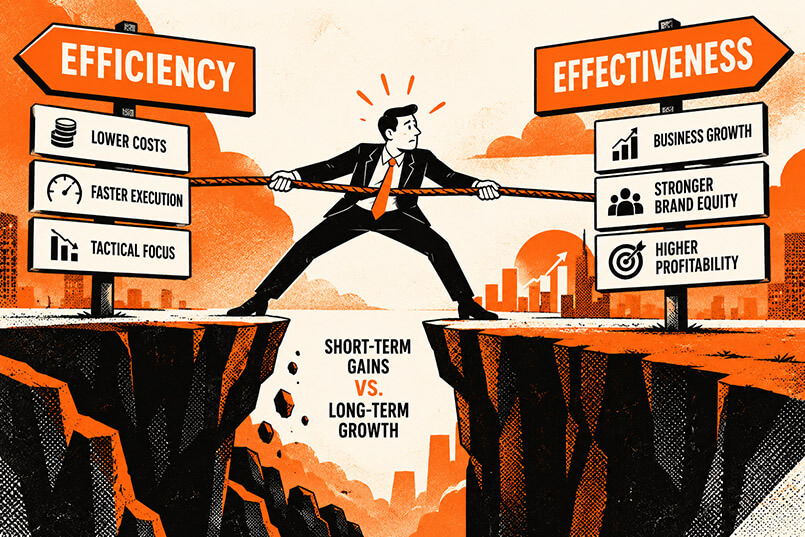
- Standardization vs. Agility: The push for operational efficiency favors standardization, yet rigidly applying uniform processes can stifle the agility and unique creative approaches needed for different brands or content verticals. The challenge is finding the balance.
Much like the editorial independence sought by media executives, the goal here is creative integrity within an operational framework. Campaigns must speak with clarity, authenticity, and consistency, regardless of the brand or content silo they come from.
Architecting Consistency: The Role of Campaign Operations Platforms
Handling this operational maze takes purpose-built technology and disciplined workflows. An advanced campaign operations platform gives modern ad ops teams the structure to focus on the fundamentals:
- Unified Creative Asset Management: A centralized system to ingest, organize, and distribute all creative assets across every brand and campaign. This makes sure teams always use the correct, approved assets, maintaining brand voice and reducing errors while preventing the misalignment that often plagues merged entities.
- Consistent Campaign Metadata Management: Metadata acts as the DNA of your campaigns. In a complex, multi-brand environment, consistent and granular campaign metadata management holds everything together. It lets you track, analyze, and optimize performance across diverse campaigns so you can see which creative elements, audiences, and platforms drive results for each brand within a consolidated entity.
- Standardized Naming Conventions: Inconsistent naming schemes can cripple reporting and analysis. Implementing and enforcing clear naming convention software across all campaign elements, from creatives to audiences to placements, is essential for clarity and data integrity.
- Automated Campaign QA: More complexity means more room for error. Integrated campaign QA software within your platform automates checks for brand compliance, technical specifications, and targeting accuracy, so every campaign launches cleanly and protects brand reputation across the portfolio.
Platforms like AdSoda.io are built for these exact challenges, providing the infrastructure to bring separate creative assets, media plans, and activation strategies into a single, cohesive workflow. From managing intricate creative versioning for multiple brands to making sure every ad platform activation aligns with global strategies, the right tools give teams agility without sacrificing control.
Building a Practical Framework for Ad Ops
As digital advertising continues to consolidate, the demands on ad ops, media planning, and marketing technology professionals will keep growing. Staying ahead means proactively building a resilient, adaptable operational framework, starting with an integrated ad operations platform that scales with your organization across any number of brands or content verticals.
Look beyond basic task management. Seek out platforms that connect creative, media planning, and ad activation so your team can deliver consistent, high-performing campaigns efficiently. Turning the abstract concept of strategic integration into clean, daily operational workflows is what keeps a multi-brand operation running smoothly.