Beyond the Default: Google Analytics' Custom Attribution Windows Reshape Campaign Operations
Google Analytics' new custom attribution windows offer a game-changer for digital marketing and ad ops. Discover how this granular control empowers more accurate performance measurement, smarter media planning, and optimized campaign operations, and what it means for your platform strategy.
In the relentless pursuit of efficient ad spend and demonstrably positive ROI, digital marketing and ad ops professionals constantly battle a fundamental challenge: aligning static reporting models with the dynamic, non-linear reality of customer journeys. For too long, default attribution windows have forced a square peg into a round hole, leading to skewed performance insights and suboptimal media planning decisions. You know the drill – an enterprise B2B sales cycle spanning months gets crunched into a 30-day window, or an impulse purchase campaign gets over-attributed because its rapid conversion doesn’t fit the broader, slower defaults. This disconnect doesn't just muddy the waters; it actively hinders strategic optimization and accurate budget allocation.
Now, Google Analytics is handing back a critical piece of that control, empowering teams to finally align attribution with true sales cycles. This isn’t merely a minor update; it's a significant shift that demands a re-evaluation of how campaigns are measured, optimized, and operationalized. For ad ops managers, media planners, and marketing technologists, this new flexibility promises to unlock a deeper understanding of advertising effectiveness and drive more intelligent, data-backed decisions.
Unpacking the Custom Attribution Update
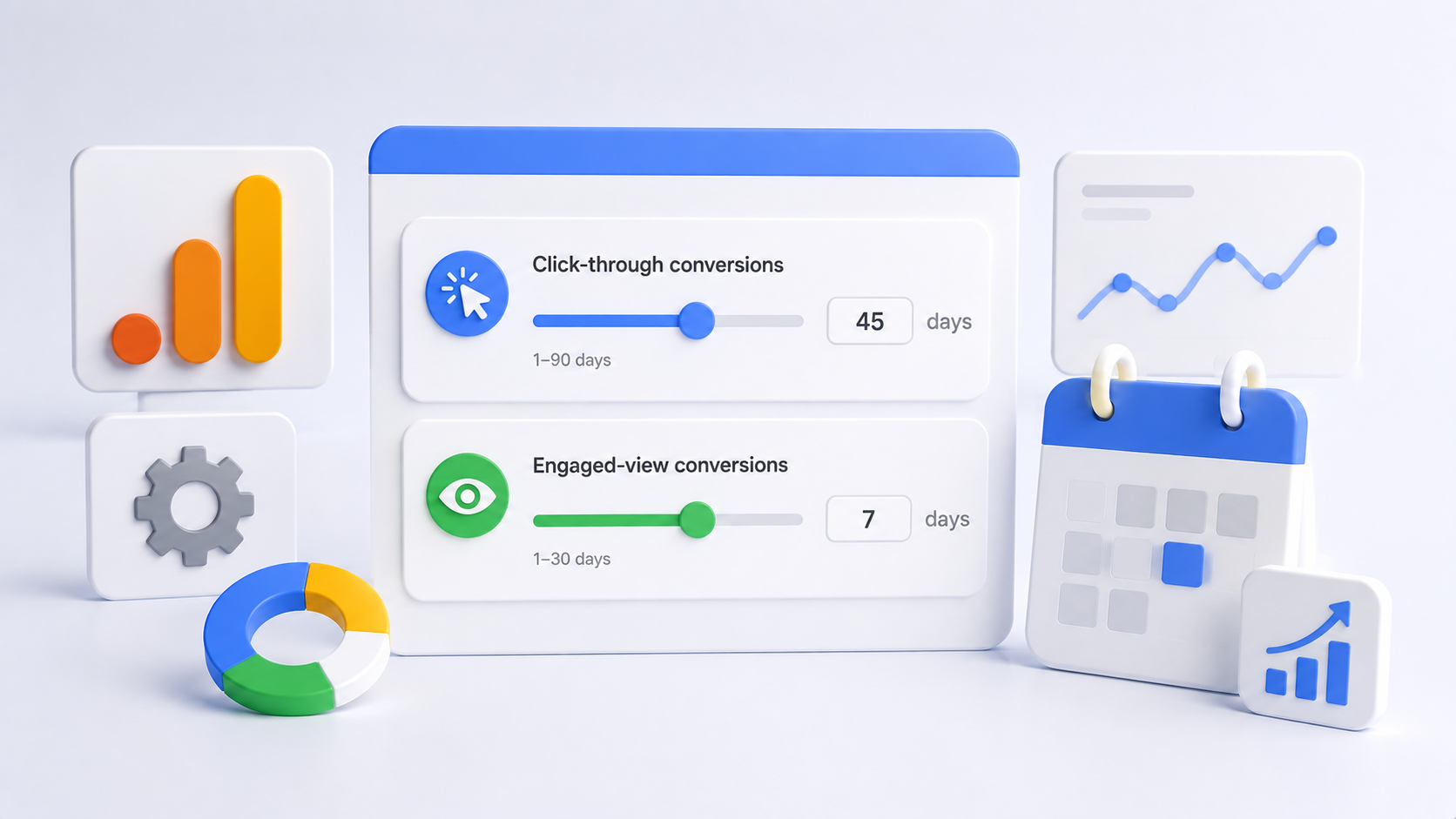
Google Analytics has rolled out the ability to set custom integer lookback windows for two pivotal conversion types, replacing previously fixed or limited options. This move acknowledges the vast diversity in customer pathways and business models, moving away from a one-size-fits-all approach that rarely served anyone perfectly:
- Engaged-View Conversions (EVC): You can now configure any value from 1 to 30 days, a substantial expansion from the former fixed 3-day window. This is particularly impactful for video campaigns or brand awareness efforts where direct clicks are less common but an engaged view still signals valuable intent.
- Click-Through Conversions (CTC): The options for CTC have dramatically broadened to any value from 1 to 90 days, moving past the restrictive preset choices of 1, 7, 14, 30, 60, or 90 days. This granular control means you're no longer confined to arbitrary milestones but can precisely match your attribution to the actual length of your customer's consideration phase, whether it's a quick e-commerce checkout or a lengthy B2B lead nurturing process.
These new settings are accessible directly within Google Analytics under Advertising > Conversion management > Settings, and are also mirrored in the linked Google Ads conversion management interface. The implications are profound: no more contorting your analytics to fit rigid attribution models. Instead, your models can finally reflect the reality of your customer acquisition funnels, fostering more accurate performance measurement and better-informed media planning.
Strategic Implications for Campaign Operations and Media Planning
This update isn't just about tweaking a setting; it's about elevating your entire campaign operations strategy. Here's what it means for your day-to-day and long-term planning:
- Precision in Performance Measurement: The primary benefit is a significant leap in data accuracy. By aligning attribution windows with real sales cycles, you eliminate much of the guesswork. Campaigns that contribute early in a long funnel won't be prematurely discounted, and conversely, those designed for rapid conversion won't be artificially inflated. This clarity directly impacts ROI calculations and allows for more confident campaign optimizations.
- Smarter Budget Allocation: With more accurate conversion data, your media planning becomes inherently more effective. You can allocate budget with greater confidence, knowing that your attribution model truly reflects the value generated by each touchpoint. This empowers media planners to build more robust strategies that account for diverse campaign objectives and customer journeys across various ad platforms.
- Enhanced Testing and Optimization: The flexibility to set custom windows opens up new avenues for A/B testing attribution models. You can experiment with different lookback periods for distinct product lines, campaign types, or geographic markets to identify the most accurate and insightful reporting framework for each scenario. This iterative approach is crucial for continuous improvement in ad operations.
- Improved Campaign QA and Consistency: While Google provides the levers, the operational challenge of consistently applying, tracking, and reporting on these custom settings across a multitude of campaigns remains. This is where a robust ad operations platform like AdSoda.io becomes indispensable. By centralizing your campaign metadata management, from creative tagging and ad platform activation to robust naming convention software and automated campaign QA software, AdSoda ensures that your meticulously crafted attribution strategies are executed flawlessly and consistently across your entire media footprint. It prevents discrepancies that can arise from manual processes and ensures that your chosen attribution windows are correctly applied to all relevant campaign elements.
- Data-Driven Creative Strategy: Understanding true conversion paths, enabled by refined attribution, also informs your creative strategy. If a longer attribution window reveals that certain creative themes or messaging resonate more effectively over an extended period, your creative teams can adapt their approach to foster that sustained engagement.
The Path Forward: Operationalizing Precision
Google Analytics' custom attribution windows are a powerful new tool, but their impact hinges on strategic implementation. This is not a set-it-and-forget-it feature. For ad ops managers, the immediate action items include reviewing your current sales cycles, analyzing historical campaign data, and experimenting with these new settings. Work closely with your media planning and analytics teams to define optimal lookback windows for different campaign types, products, and customer segments.
Moreover, consider how your existing campaign operations platform or media planning software integrates with these new GA4 capabilities. The ability to manage, track, and report on these granular attribution settings across your entire ad ecosystem is paramount. A platform that offers robust campaign metadata management ensures that every team member understands and adheres to the chosen attribution logic, from initial setup to final reporting. This proactive approach to operationalizing precision will be key to unlocking the full potential of this update, moving your ad operations from reactive reporting to truly strategic, data-led growth. Ultimately, this enhanced control is about making every ad dollar work harder, backed by insights that genuinely reflect customer behavior, not arbitrary limitations.
You might also like

Beyond the Click: Why Real-Life Creator Experiences Are Reshaping Campaign Operations
As digital noise reaches a fever pitch, a growing number of creators are making a strategic pivot to real-life (IRL) events to forge deeper connections and deliver measurable value. For ad ops managers, media planners, and marketing technologists, this shift isn't just a trend—it's a critical opportunity to redefine campaign strategy, optimize engagement, and unlock new levels of performance attribution. Learn how to operationalize authenticity and integrate IRL experiences into your media plan for unparalleled impact.
Read more →
Beyond the Click: How Google's Expanded AI Overviews Reshape Campaign Operations
Google's dynamic expansion of AI Overviews is reshaping the search landscape, pushing down traditional organic results and challenging the very economics of digital advertising. For ad ops managers and media planners, this means a critical re-evaluation of campaign operations, from creative asset management and media planning to campaign QA and metadata governance. Discover how to adapt and thrive in an 'answer-first' world with operational precision and advanced campaign platforms.
Read more →
Beyond the Click: Operationalizing Fandom for Deeper Campaign Impact
The digital ad landscape demands a new strategy. Fandoms offer a path to deeper connection, but operationalizing them requires a sophisticated approach to creative asset management, media planning, and measurement. Discover how ad ops can leverage identity-driven engagement for lasting brand impact.
Read more →Ready to streamline your campaign operations? Sign up for AdSoda and take control of your media planning and ad activation — free to get started.