DV360 API Changes: The Operational Imperative for Brand Safety & Creative Compliance
Google's recent unversioned DV360 API changes are more than technical footnotes—they're operational imperatives for ad ops. Learn how to adapt your brand safety workflows and creative asset management, leveraging a robust campaign operations platform to ensure compliance and efficiency amidst platform shifts.
In the relentless sprint of digital advertising, just when ad ops teams find their rhythm, a platform update often demands a recalculation of their entire workflow. The churn of ad tech is a constant, but the pressure to maintain operational efficiency, brand safety, and creative compliance never lets up. Google’s recent unversioned changes to the Display & Video 360 (DV360) API and Structured Data Files are a prime example, presenting immediate implications for campaign managers, media planners, and marketing technologists.
Unlike versioned updates, these unannounced shifts require agile adaptation, not deferred migration. For any organization running programmatic campaigns through DV360, particularly those with deep integrations or relying on an ad operations platform, these changes aren't just technical footnotes – they're operational imperatives that demand immediate attention.
Re-evaluating Your Brand Safety Framework
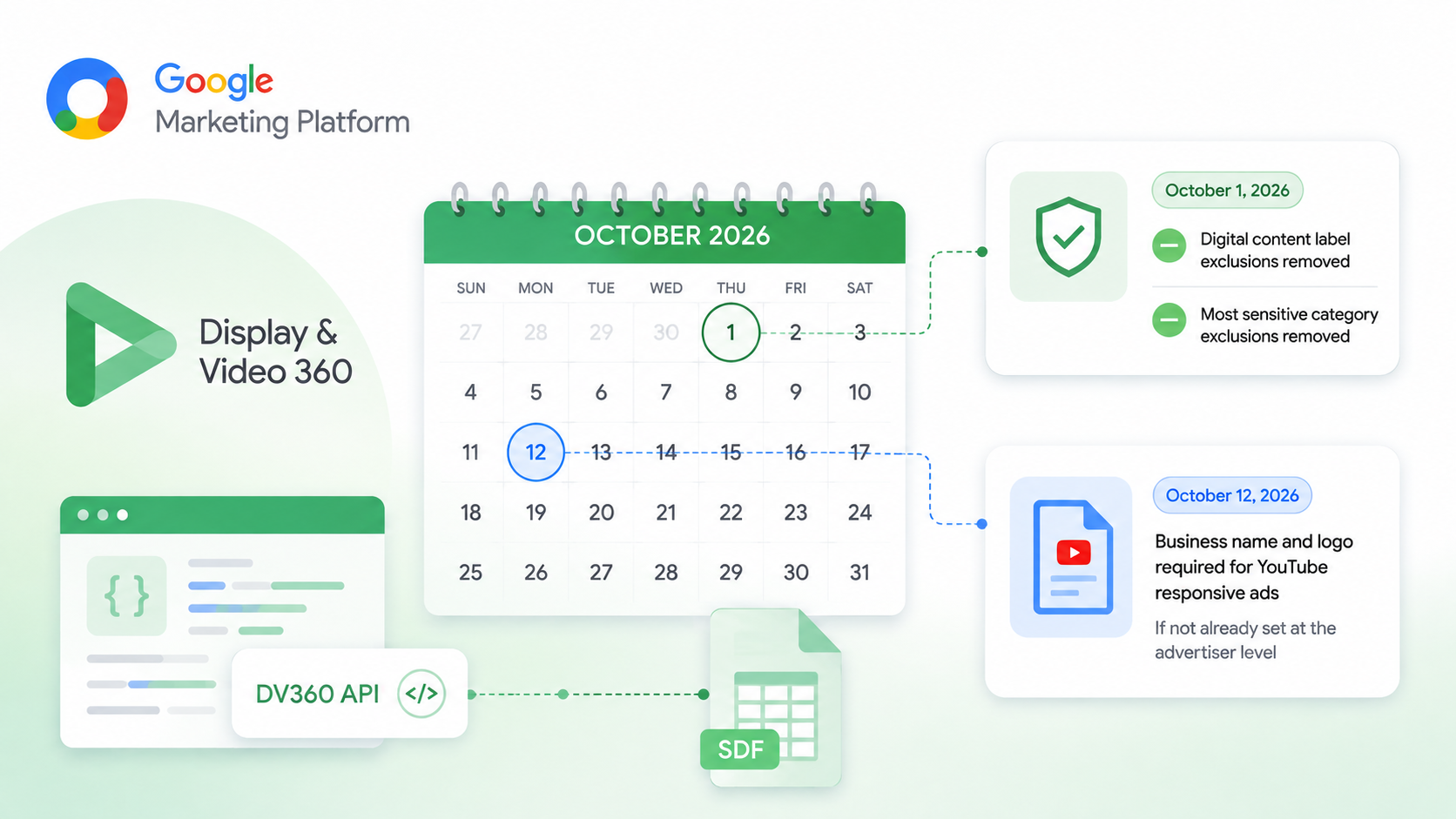
Starting October 1st, Google is removing several targeting options related to content exclusion. Specifically, advertisers will no longer be able to use the DV360 API to exclude certain digital content labels (TARGETING_TYPE_DIGITAL_CONTENT_LABEL_EXCLUSION) or the majority of sensitive categories (TARGETING_TYPE_SENSITIVE_CATEGORY_EXCLUSION). This also impacts the relevant columns within Line Item Structured Data Files.
For ad ops managers and media planners, this is not a minor tweak; it’s a fundamental shift in how brand safety is configured and executed within DV360. If your current brand safety strategy heavily relies on these granular API-driven exclusions, you'll need to promptly review and likely revise your existing frameworks. The implications extend beyond just technical settings; it’s about reassessing risk tolerance, exploring alternative brand safety levers, and potentially adjusting media plans to account for a broader range of content exposure. A robust campaign metadata management system, integrated into your ad operations platform, becomes even more critical here. It enables you to track and apply new brand safety parameters consistently across campaigns, ensuring that changes in platform capabilities don't lead to compliance gaps.
New Requirements for YouTube Responsive Ads: A Creative Operations Challenge
Beyond brand safety, a separate change taking effect October 12th introduces new requirements for YouTube responsive ads created or updated via the DV360 API or Ad Structured Data Files. Developers will now be required to provide a business name and logo, particularly if default values haven't already been assigned to the parent advertiser.
This seemingly straightforward update carries significant operational weight. For teams managing high volumes of creative assets, ensuring every YouTube responsive ad has the correct, compliant business name and logo readily available before activation is paramount. This isn't just a developer’s concern; it’s a creative asset management and campaign QA software challenge for marketing technologists and campaign managers. Delays in providing these assets can halt campaign launches, impacting timelines and performance. A centralized campaign operations platform that integrates creative asset management can streamline this process, ensuring required elements are pre-approved, version-controlled, and seamlessly linked to ad units, preventing last-minute scrambles and ensuring adherence to new platform guidelines.
The Operational Imperative: Audit, Adapt, and Automate
Given the unversioned nature of these changes and their direct impact on both brand safety and creative compliance, the call to action for ad ops professionals is clear: proactive auditing and adaptation. Google's advice to developers to follow recommended actions in deprecation descriptions underscores the need for internal teams and their marketing technology partners to assess affected integrations well before the October deadlines.
This is where a sophisticated campaign operations platform truly demonstrates its value. It’s not just about managing campaigns; it’s about managing the operations that underpin them. For instance, using robust campaign QA software allows teams to quickly identify campaigns or ad units that might be impacted by these changes. Furthermore, the disciplined application of naming convention software within your platform ensures consistency in how metadata and assets are tagged, making it easier to audit and update workflows en masse.
These DV360 API changes are more than technical adjustments; they are a catalyst for refining your operational resilience. Leveraging a comprehensive ad operations platform like AdSoda.io means you can centralize your media planning software functions, creative assets, and campaign metadata management. This proactive approach helps you not only navigate these immediate changes but also future-proof your ad ops against the inevitable flux of the digital advertising ecosystem. Don't just react; pre-empt.
You might also like

The Operational Impact of Brand Shifts: Why Your Ad Ops Needs Agility
Discover how a brand's strategic pivot, like Sonos' recent repositioning after a faulty app update, impacts your ad operations. Learn why robust campaign metadata management, precise QA, and an agile campaign operations platform are critical for maintaining trust and performance amidst brand shifts.
Read more →
The Unseen Threats: Why Digital Sabotage Demands a New Operational Playbook for Ad Ops
A recent lawsuit over SEO sabotage via toxic backlinks highlights a new, unseen threat in digital advertising. Ad ops managers and media planners must broaden their definition of 'brand safety' to encompass external digital attacks. Learn how a robust campaign operations platform, meticulous metadata management, and consistent naming conventions can fortify your defenses and ensure campaign integrity in an increasingly adversarial digital landscape.
Read more →
Beyond the Big Split: What Corporate Agility Means for Your Ad Operations
Discover how the principles behind corporate splits for agility and focus apply directly to modern ad operations. Learn how integrating a robust campaign operations platform can help ad ops managers, media planners, and marketing technologists achieve 'operational agility' by streamlining creative asset management, media planning, and ad platform activation, leveraging consistent naming conventions and robust QA to drive efficiency and unlock strategic potential.
Read more →Ready to streamline your campaign operations? Sign up for AdSoda and take control of your media planning and ad activation — free to get started.