From Asset Storage to Activation Powerhouse: Bridging the Ad Ops Content Gap
Discover how to bridge the Content Activation Gap in ad operations. Learn the five critical shifts needed to transform your DAM from a static library into a dynamic powerhouse for ad ops, leveraging headless integration, AI agents, and a robust campaign operations platform like AdSoda.io for faster, more effective campaign launches.
You’ve invested significantly in a cutting-edge Digital Asset Management (DAM) system. Your creative assets are centralized, meticulously tagged, and governed by robust permissions. By all standard measures, your DAM implementation was a success. So why are campaigns still launching late, creative teams drowning in resize requests, and media planners scrambling for the right version of a hero image at the eleventh hour?
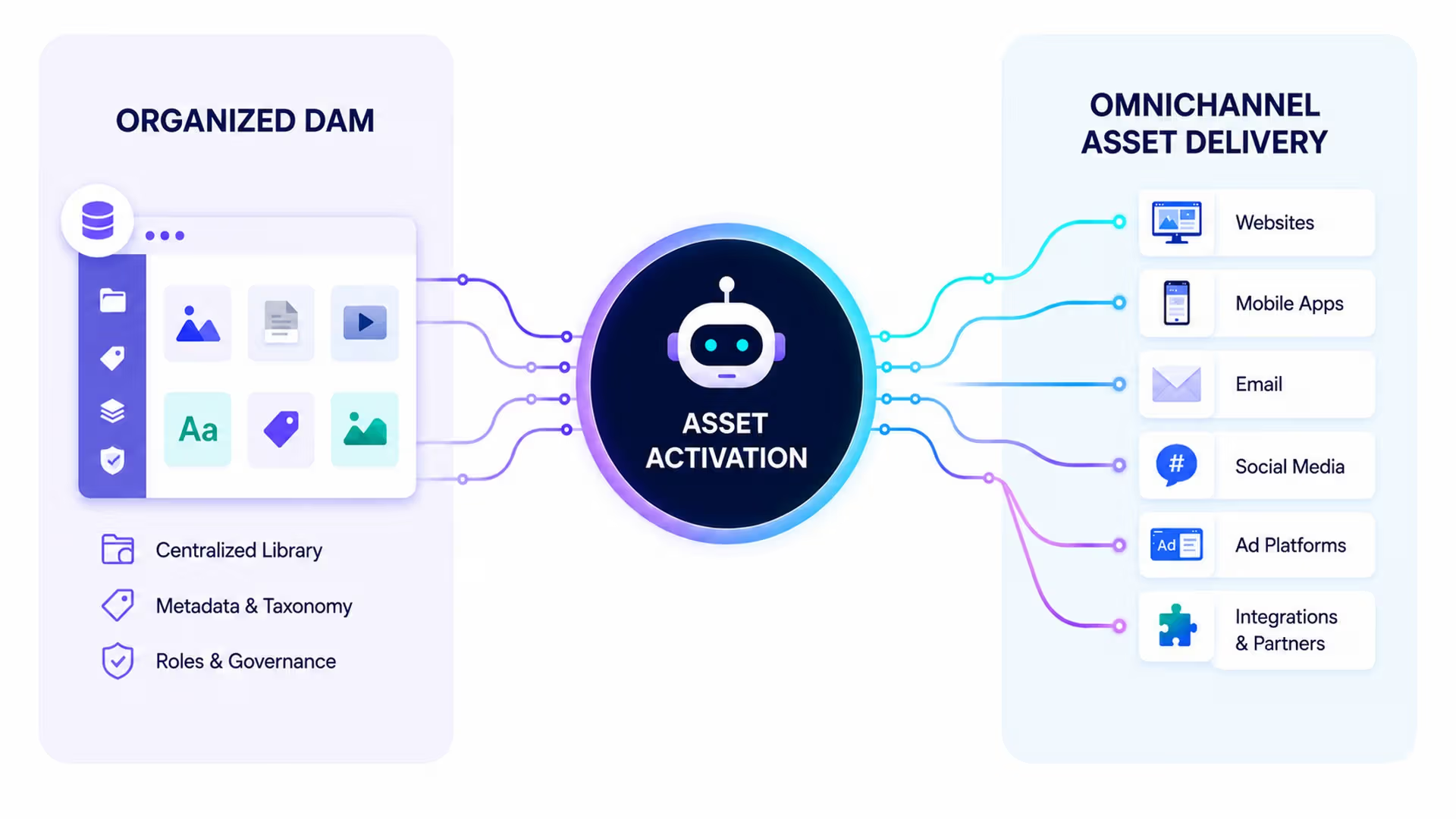
This isn't a problem with your DAM; it's a disconnect between asset storage and asset activation. Your DAM effectively solved the “library problem” – organizing and managing a vast repository of content. But ad operations doesn’t just need a library; it needs a highly efficient supply chain to deliver those assets to market. An asset sitting perfectly in your DAM is still miles away from reaching a customer as a compelling ad, a social creative, or a landing page hero image, in the right format, at the right quality, and at the precise moment it’s needed across a fragmented ad ecosystem. This distance defines the Content Activation Gap.
Today, the demand for creative assets has skyrocketed, with some reports indicating a 5x increase in content needs over the past two years. Simultaneously, the number of channels – from social and programmatic to CTV and native – has proliferated. This convergence places immense pressure on traditional content activation workflows, which, for many, haven’t evolved significantly in half a decade. To bridge this gap and transform your creative library into an ad ops powerhouse, five critical shifts are essential.
Integrating for Campaign Velocity
The traditional DAM model, where a user logs in, navigates folders, downloads an asset, and manually uploads it to the next system, is a bottleneck for modern ad operations. This manual handoff simply breaks down at scale, hindering the speed and agility required for effective campaign execution.
The first critical shift is from portal navigation to headless integration. Modern ad operations platform solutions leverage headless API access, allowing authorized ad platforms, dynamic creative optimization tools, and other marketing technology systems to directly write to or read from the DAM. Imagine an automated system pulling product images from the DAM the instant a dynamic ad renders, or a video production tool pushing finalized ad creatives directly into your campaign folders without manual intervention. This dramatically streamlines creative deployment and reduces the risk of human error.
Secondly, the constant need for designers to resize, reformat, and export variations for different ad placements (e.g., a 1920x1080 display ad, a 1200x628 social card, a 400x400 thumbnail) is a massive drain on resources. The shift here is from stored exports to on-demand variants and versions. By utilizing URL-based transformations, a single master asset can dynamically generate countless variants for any ad dimension or channel requirement in real-time. Add parameters for size, format, or even AI-powered edits like background swaps or generative fill, and the variant appears on demand. This isn't just about efficiency; it's about agility, allowing media planning software and campaign managers to adapt creatives instantly to performance needs without waiting on design cycles. Updates to a master asset reflect across all campaigns instantaneously, ensuring brand consistency and preventing outdated creatives from going live.
AI-Powered Precision for Ad Ops Readiness
A growing asset library doesn't stay pristine on its own. Tags drift, campaign metadata management becomes inconsistent, and unapproved file formats can sneak in. Manual housekeeping doesn't scale with the volume of assets required for ongoing campaigns, leading to compliance issues or ineffective targeting.
This leads to the third shift: from manual upkeep to autonomous AI agents. These agents can perform quality control on every upload, enforce controlled vocabularies and taxonomies, apply naming convention software requirements, and hold drafts until approval. For an ad operations platform, this ensures every creative asset is campaign-ready – correctly tagged, compliant, and approved – before it even enters a live ad platform. This proactive quality assurance is a game-changer, acting as built-in campaign QA software to prevent costly errors and delays down the line.
Finally, at the scale of modern ad campaigns, traditional keyword search within a DAM becomes a gamble. Teams might tag assets inconsistently (e.g., “T-shirt” vs. “TShirt”), leading to missed opportunities or the wrong creative being deployed. This problem is compounded when downstream consumers are increasingly AI agents themselves, demanding precise and contextually relevant assets.
The fourth shift is from hopeful search to AI-powered discovery. Natural-language queries, visual search capabilities, and AI indexing of video content (identifying objects, scenes, or spoken dialogue) mean that media planning software professionals and campaign managers can find the exact creative they need, not just based on keywords, but on its actual content and meaning. This reduces the risk of deploying incorrect assets and dramatically accelerates creative selection for targeted campaigns.
The Connected Campaign Operations Platform
These shifts culminate in a fundamental re-evaluation of your ad tech stack. A modern DAM cannot be a standalone silo. Creative apps, AI coding assistants, marketing copilots, and campaign automation agents all need to interact with your asset library directly.
This interconnected, intelligent ecosystem is precisely where a modern campaign operations platform like AdSoda.io becomes indispensable. It acts as the central nervous system, connecting your creative assets from their origin in the DAM to their activation across diverse ad platforms, powered by streamlined workflows and intelligent automation. It's the infrastructure that enables these five shifts, ensuring that your creative assets aren’t just stored, but mobilized.
The question for ad ops professionals has changed. It’s no longer just “where do we store our assets?” That problem is largely solved. The new, more critical question is: “How fast, how effectively, and how intelligently can those assets reach our customers across every channel, optimized and compliant, ready for both human teams and AI agents to act on?”
By embracing these five shifts – headless integration, on-demand variants, autonomous AI agents, and AI-powered discovery, all orchestrated by a robust campaign operations platform – you transform your creative library from a static repository into a dynamic activation engine. The future of ad ops isn't just about managing assets; it's about accelerating their journey to impact, turning your creative library into an activation powerhouse that drives campaign performance and business growth.
You might also like

Beyond the Headlines: What TV Ratings Can Teach Us About Digital Campaign Operations
Discover how the nuanced complexities of TV news ratings — from performance shifts to the impact of 'retitled' broadcasts — offer vital lessons for digital ad ops. Learn why granular data analysis, robust naming conventions, and meticulous QA are critical for navigating campaign performance, leveraging an advanced campaign operations platform like AdSoda to transform raw data into strategic insights.
Read more →
Beyond Buzzwords: How AI-Powered Design Systems Elevate Your Ad Ops
The creative treadmill in digital advertising is faster than ever. Ad ops, media planners, and campaign managers face immense pressure to scale creative production while maintaining brand consistency. Discover how AI-powered design systems offer a strategic solution, transforming manual workflows into programmatic engines for efficiency, consistency, and superior campaign performance. Learn how this integration elevates creative asset management, media planning, and campaign QA within your ad operations platform, making platforms like AdSoda.io an even more powerful hub for your advertising ecosystem.
Read more →
Beyond the Beautiful Ad: What Eli Lilly's GLP-1 Campaign Teaches Us About Modern Ad Operations
Eli Lilly's "A Life Covered" campaign for GLP-1s is more than just a beautiful ad; it's a masterclass in modern campaign operations. Learn how high-stakes creative, precise targeting, and regulatory compliance demand robust campaign operations platforms, advanced media planning software, and meticulous campaign QA from this example. Discover the critical role of platforms like AdSoda.io in unifying creative asset management, media planning, and ad platform activation to deliver impactful campaigns in complex sectors.
Read more →Ready to streamline your campaign operations? Sign up for AdSoda and take control of your media planning and ad activation — free to get started.