Google Ads Editor 2.13: How AI Updates Are Reshaping Campaign Operations
Google Ads Editor 2.13 signals a major shift in how AI is integrated into campaign management. For ad ops managers, media planners, and marketing technologists, this update demands a re-evaluation of workflows, creative asset management, and the need for robust campaign operations platforms to maintain strategic control amidst increasing automation.
The digital advertising landscape has always been a high-stakes arena, but today, a new tension defines it: the rapid acceleration of AI-driven automation from ad platforms versus the enduring demand for granular control, brand consistency, and operational oversight from your teams. It’s no longer about if AI will impact your workflows, but how deeply and how quickly you can adapt your campaign operations to harness its power without losing strategic command.
Google Ads Editor 2.13 is a prime example of this evolving dynamic. What might appear as a routine update to some, for ad ops managers, media planners, and marketing technologists, it signals a significant shift. This isn't just about new features; it's about Google embedding its AI deeper into core campaign management functions, fundamentally changing how you’ll approach everything from creative asset generation to performance optimization. And critically, it underscores the need for robust, holistic campaign operations platforms that can keep pace.
Navigating AI’s Expanding Footprint in Campaign Operations
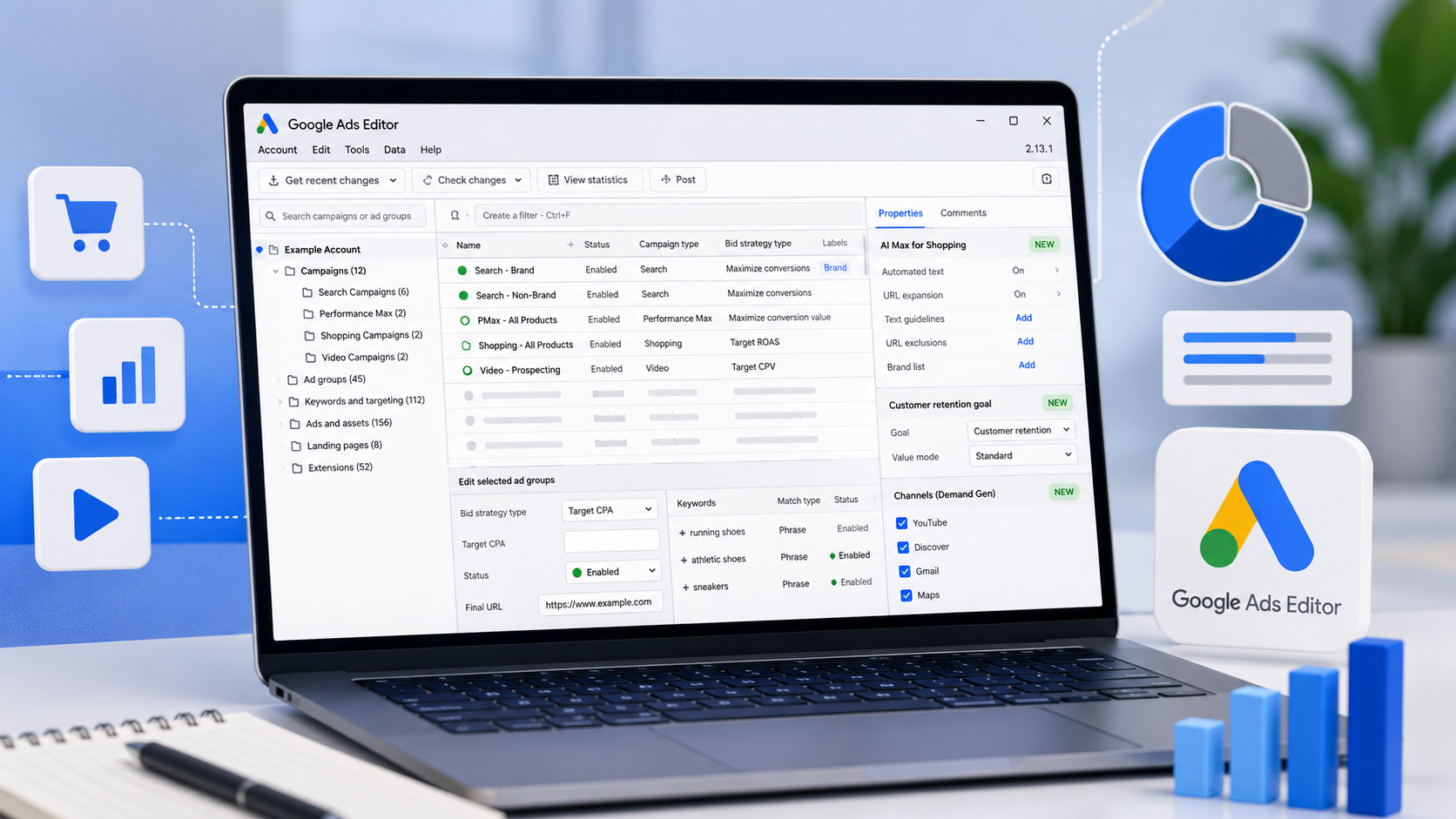
The headline feature of Editor 2.13 is the full support for AI Max in Shopping campaigns. This isn't just an incremental improvement; it brings Shopping campaigns into parity with Search and Performance Max campaigns in terms of AI-powered capabilities within Editor. For those managing large-scale retail accounts, this is a game-changer. Automated text generation, URL expansion controls, and brand lists directly impact your creative asset workflows and campaign metadata management strategies. Where previously you might have meticulously crafted every product description, AI now offers to generate variations. While this promises efficiency, it also necessitates a more rigorous campaign QA software process to ensure brand voice, legal compliance, and messaging consistency across potentially hundreds or thousands of product ads.
Consider the implications for media planning. With AI influencing ad copy and landing page selection more directly, your media plans need to account for these dynamic elements. The support for Customer Retention Goals in Performance Max further refines this. Instead of a blanket acquisition strategy, campaigns can now be optimized for re-engagement, requiring a nuanced approach to audience segmentation and creative messaging – a shift that sophisticated media planning software must now accommodate to ensure alignment with platform capabilities.
Editor 2.13 also introduces new Business Name and Business Logo fields for responsive and non-skippable video ads, alongside Maps placement support for Demand Gen campaigns. These seemingly small additions contribute to the growing complexity of creative asset management, demanding that your ad operations platform can handle a broader array of asset types and their associated metadata, ensuring they are correctly tagged, stored, and deployed across diverse campaign objectives and placements.
The Operational Implications of Editor’s Evolution
Historically, Google Ads Editor was a workhorse for bulk editing and managing campaigns offline, providing efficiency for large-scale changes. With version 2.13, its evolution from a 'simple' bulk editing tool to a comprehensive, AI-integrated campaign management interface is undeniable. The new AI-generated content disclosure controls (User Attestation field) for image and video assets are a testament to this. It’s a direct response to the emerging need for transparency and accountability when leveraging generative AI in ad creatives. This means your operational workflows must now incorporate checks and balances not just for human-created content, but also for AI-generated elements, verifying disclosures and ensuring they meet brand and platform guidelines.
For campaign managers, the move away from legacy campaign types, specifically the removal of support for creating new Video Action campaigns in favor of Demand Gen, highlights Google’s strategic push towards more consolidated, AI-driven campaign structures. This forces teams to adapt quickly, re-evaluating their existing campaign setups and potentially migrating strategies to newer, AI-centric formats. This isn’t just a one-off task; it requires an ongoing process of learning, adaptation, and integration into your existing campaign operations platform to maintain efficiency and competitive edge.
Native Channel Performance reporting in Editor also closes a gap, making Editor's reporting closer to the web interface. While beneficial for direct platform users, for cross-channel advertisers, this reinforces the need for a unified reporting solution that aggregates data from Google Ads Editor and other platforms into a single, comprehensive view. This ensures media planners and analysts can derive truly holistic insights, rather than relying on fragmented platform-specific reports.
Future-Proofing Your Ad Operations: Beyond Platform-Specific Tools
Google Ads Editor 2.13 demonstrates a clear trajectory: ad platforms are becoming increasingly intelligent, automating more aspects of campaign management. While this offers immense potential for efficiency, it simultaneously elevates the need for robust oversight and strategic control from your end. Relying solely on platform-specific tools, however powerful, leaves gaps in cross-platform consistency, creative asset governance, and holistic reporting.
This is where a dedicated campaign operations platform becomes indispensable. As AI drives more of the creative generation and optimization, your team's focus shifts from manual data entry to strategic oversight, data validation, and ensuring brand consistency. Tools like AdSoda.io bridge the gap by providing a central hub for creative asset management, facilitating consistent campaign metadata management across all channels, and empowering sophisticated media planning software capabilities that account for both human strategy and AI-driven optimizations. It’s about ensuring that as Google’s Editor evolves, your overall ad ops strategy evolves even faster, enabling you to command your campaigns with precision, even as AI takes the wheel on specific tasks. The future of ad ops isn't just about using AI; it's about orchestrating it.
You might also like

Beyond the Headline: What the Miroma-ARM Acquisition Signals for Modern Campaign Operations
Miroma Group's acquisition of Ad Results Media highlights a critical tension in modern advertising: the need for hyper-specialized media expertise alongside scaled, integrated campaign operations. This blog post explores the operational challenges this trend presents for ad ops managers and media planners, emphasizing the necessity of robust campaign operations platforms, effective campaign metadata management, and streamlined workflows to integrate diverse media channels like audio and creator content. It underscores how an advanced ad operations platform can unify naming conventions, creative asset management, and campaign QA across fragmented media buys.
Read more →
AI as a New Media Channel: Decoding OpenAI's Strategic Shift for Ad Operations
The executive shifts and aggressive ad push at OpenAI signal a new era: AI platforms are becoming core media channels. This demands a re-evaluation of how ad ops managers and media planners manage, measure, and activate campaigns, emphasizing the critical need for adaptable campaign operations platforms, robust metadata management, and consistent naming conventions.
Read more →
Beyond Org Charts: What Disney's Latest Marketing Moves Tell Us About Global Campaign Operations
Disney's recent marketing restructuring offers a masterclass in global campaign operations. We unpack what their moves mean for ad ops managers and media planners, highlighting the critical need for integrated platforms that centralize creative asset management, streamline media planning, and enforce consistency across complex, multi-regional campaigns. Learn why operational cohesion isn't just about efficiency, but about strategic agility in today's dynamic advertising landscape.
Read more →Ready to streamline your campaign operations? Sign up for AdSoda and take control of your media planning and ad activation — free to get started.