Google's Limited Ad Serving: Why Operational Excellence is Your New Ad Delivery Strategy
Google’s expanded Limited Ad Serving policy isn't just another update; it's a profound recalibration impacting ad delivery. This shift demands a proactive, operational approach to building and maintaining platform trust, integrating it into the core of your campaign management strategy. Learn how operational excellence, creative asset management, and robust campaign QA are your new keys to unrestricted ad delivery.
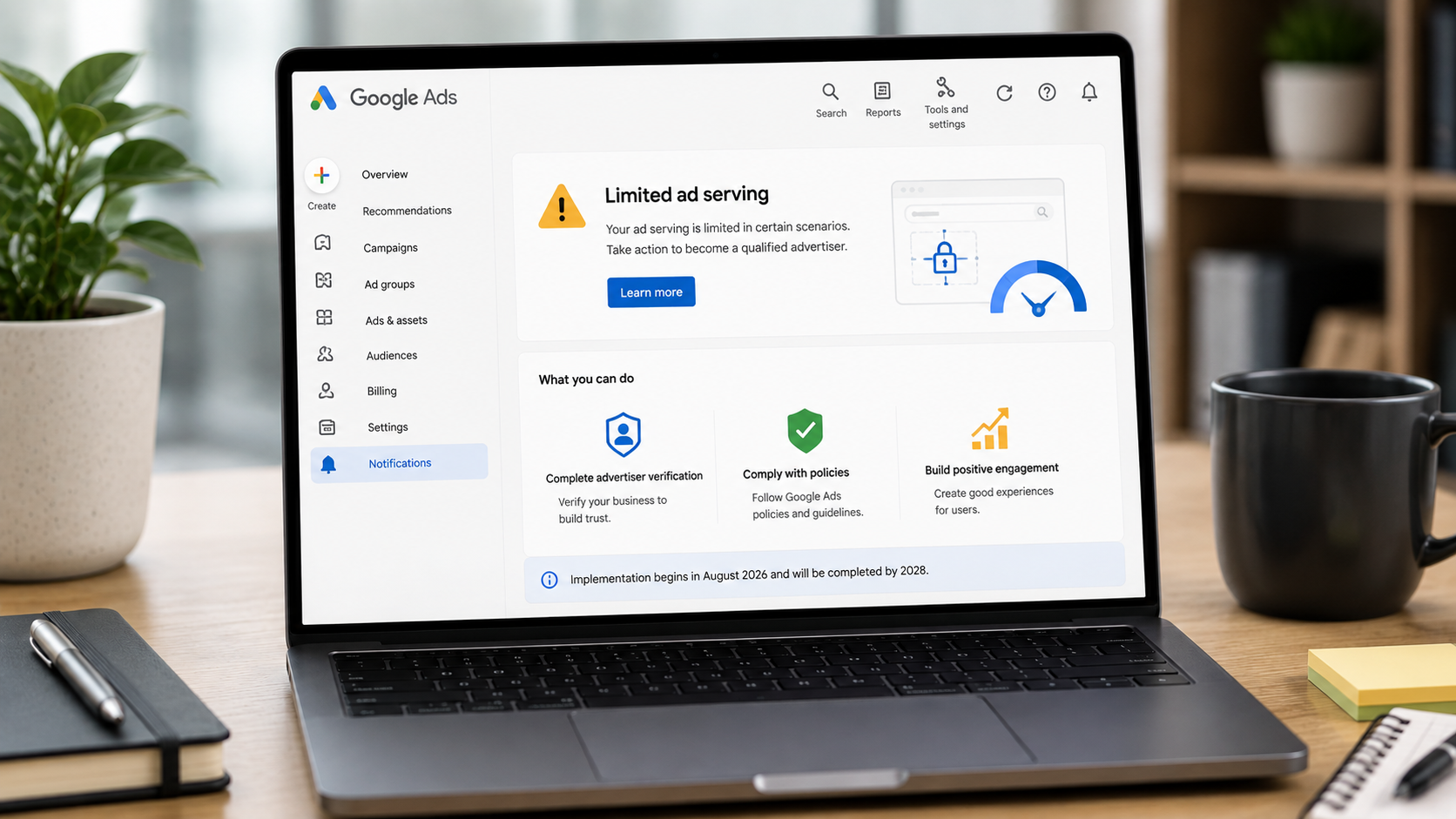
In an increasingly privacy-centric and user-experience-driven digital landscape, the rules of the game are constantly shifting. For too long, digital marketers have focused primarily on bid strategies, targeting precision, and creative optimization. Yet, a more fundamental, often overlooked, layer of complexity is emerging: platform trust. Google’s expanded Limited Ad Serving policy, rolling out gradually through 2028, isn't just another policy update; it’s a profound recalibration of how ad platforms evaluate and distribute your campaigns, directly impacting your reach and return.
This isn't about outright ad disapprovals for clear policy violations. Instead, Google is introducing a nuanced system where impressions are limited for accounts deemed “higher risk” or “unqualified” in specific ad-serving scenarios. What does this mean for your ad ops team, media planners, and campaign managers? It means campaigns might not fail, but they could dramatically underperform, not due to budget or bidding, but because a gatekeeper—Google itself—has quietly restricted their reach. This shift demands a proactive, operational approach to building and maintaining platform trust, integrating it into the core of your campaign management strategy.
The Operational Impact of Trust Signals
Google’s qualification criteria are multi-faceted, encompassing account maturity, advertiser verification status, policy compliance history, user reports, ad format usage, industry, and other account attributes. For digital marketing professionals, this list should immediately flag a critical insight: these are largely operational signals. Your ability to maintain consistent branding, adhere to best practices, and ensure a positive user experience across every touchpoint now directly correlates with your ad delivery potential.
This move by Google fundamentally alters the risk landscape. What once might have been a minor creative inconsistency or a slow verification process could now translate into reduced impressions, making it harder to diagnose performance issues. A campaign that looks perfectly set up in your ad operations platform could still be kneecapped by a trust deficit, creating a new layer of complexity for campaign QA and performance analysis. This isn't just about avoiding penalties; it's about actively earning the right to full inventory access.
Building Trust: Beyond Basic Compliance
The traditional focus on merely avoiding policy violations is no longer sufficient. Google is now emphasizing a holistic view of advertiser credibility. For ad ops managers and marketing technologists, this translates into several critical operational imperatives:
- Prioritize Advertiser Verification: This should be a non-negotiable, proactive step. Integrate verification status into your campaign launch checklists and ensure your team has a clear process for timely completion. It's foundational to Google's trust assessment.
- Elevate Campaign QA and Naming Conventions: Policy compliance is not static. Regular audits and a robust campaign QA software solution are essential to ensure all creatives, landing pages, and ad copy meet current guidelines. Furthermore, consistent naming convention software ensures all assets and campaigns are properly categorised and tracked, contributing to a clean account history—a key trust signal. This helps maintain a high standard across all campaigns, flagging potential issues before they impact ad serving.
- Master Creative Asset Management & Branding: Google explicitly calls out consistent branding across ads and landing pages. This is where a centralized creative asset management system becomes invaluable. Platforms that serve as your ad operations platform, like AdSoda, allow teams to manage, approve, and deploy creatives with version control and brand guidelines built-in. This ensures uniformity and reinforces brand identity, reducing the risk of inconsistent messaging that might erode trust.
- Harness Campaign Metadata Management: Google uses a range of signals, including historical policy compliance and account attributes. A robust campaign metadata management system, often integrated within a comprehensive ad operations platform, is crucial here. It allows you to track, analyze, and report on these historical trust signals, providing insights into areas for improvement and a clear record of compliance. This data becomes vital for understanding and improving your overall trust score.
- Focus on User Engagement: For platforms like YouTube, Gmail, and Discover, generating positive user engagement is paramount. This requires thoughtful media planning and creative development. Testing, iterating, and leveraging insights from your media planning software to understand what resonates with your audience can help build a positive interaction history, which Google factors into its assessment.
The Future: Operationalizing Your Trust Score
Google’s expanded Limited Ad Serving policy signals a future where operational excellence isn’t just about efficiency; it’s about access. Marketing professionals who master the art of building and maintaining platform trust will be the ones who secure unrestricted access to valuable inventory, while others struggle with unseen limitations.
This isn't a passive waiting game. It demands a proactive investment in processes and technology. Integrating tools for campaign metadata management, creative asset management, campaign QA software, and naming convention software within a unified ad operations platform like AdSoda isn't just a convenience anymore—it's a strategic imperative. By centralizing these functions, you empower your teams to build and maintain the foundational trust signals that Google now demands, ensuring your campaigns consistently reach their full potential, not just theoretically, but in every served impression.
You might also like

TikTok's New Commerce Features: A Call to Action for Ad Ops and Campaign Management
TikTok's new direct checkout and AI shopping assistant signal a profound shift, turning the platform into a full-funnel conversion engine. For ad ops, this means rethinking creative strategy, optimizing for in-app conversions, and demanding robust operational frameworks for creative asset management, QA, and data accuracy.
Read more →
The Unseen Engine: How Operational Excellence Powers Standout Ad Campaigns
In a crowded digital landscape, simply having a great ad idea isn't enough. Discover how the most effective campaigns, from celebrity endorsements to avant-garde concepts, are powered by meticulous campaign operations, robust creative asset management, and strategic ad platform activation. Learn what it truly takes to make your campaigns not just seen, but remembered.
Read more →
Decoding WPP's AI Bet: The Future of Creative Production in Ad Operations
WPP's new AI-powered production hub signals a major shift for ad operations. Learn how integrating creative production, leveraging AI for asset management and QA, and building a cohesive campaign operations platform are essential for modern campaign managers and media planners to thrive.
Read more →Ready to streamline your campaign operations? Sign up for AdSoda and take control of your media planning and ad activation — free to get started.