Meta's 2026 Ad Efficiency: What It Means for Your Campaign Operations Strategy
The digital advertising landscape feels like a constant high-wire act. Budgets are tight, performance targets are escalating, and the complexity of managing…
The digital advertising landscape feels like a constant high-wire act. Budgets are tight, performance targets are escalating, and the complexity of managing campaigns across an ever-growing array of platforms and formats is reaching a boiling point. In this environment, every percentage point of efficiency gain matters – not just for the bottom line, but for the sanity of ad ops managers, media planners, and campaign teams navigating the daily grind.
That’s why the latest benchmark data from WordStream by LocaliQ for 2026 on Facebook ad performance is more than just interesting; it’s a strategic signal. The report highlights a significant shift: cheaper clicks and stronger engagement across Meta platforms, with lead costs holding largely flat. For those of us focused on operationalizing advertising spend, this isn't just a fleeting trend; it’s an opportunity to re-evaluate our playbooks.
The Data At A Glance: Efficiency Gains Unpacked
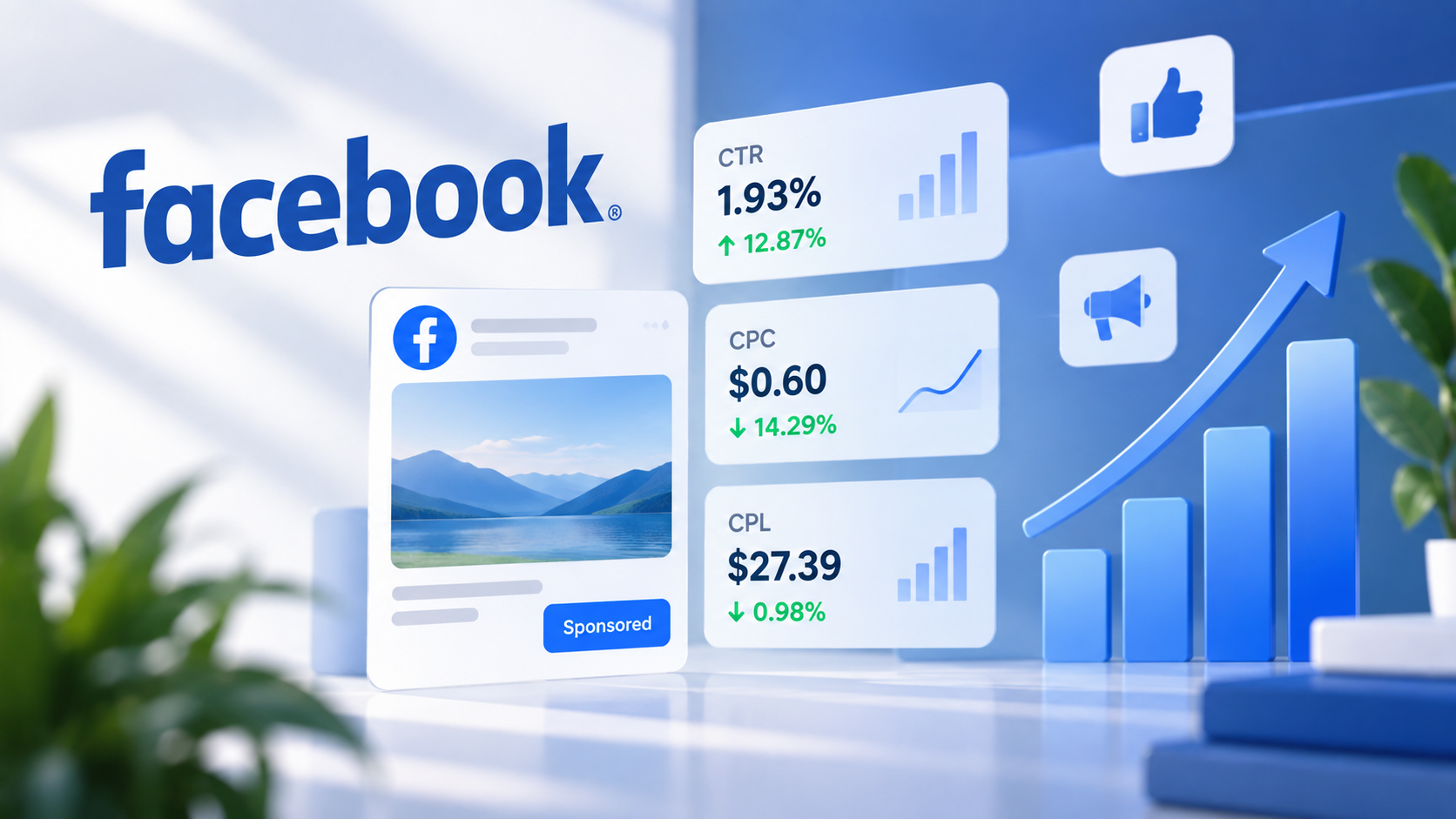
The headline figures from nearly 1,800 Facebook ad campaigns are compelling. Traffic campaigns saw average click-through rates (CTR) jump 12.87% year-over-year to 1.93%, while the average cost per click (CPC) plummeted 14.29% to a mere $0.60. Imagine the leverage this offers: more engagement for less spend, extending the reach of your top-of-funnel initiatives without busting your budget.
Lead generation campaigns weren't far behind. They recorded an average CTR of 2.70% (up 4.25% YoY) and an average CPC of $1.80 (down 6.25% YoY). Crucially, despite these improvements in engagement and click efficiency, the average cost per lead (CPL) remained remarkably stable at $27.39, dipping only 0.98%. This suggests that Meta's optimization algorithms are getting smarter at delivering not just clicks, but qualified clicks that convert without driving up lead acquisition costs.
Industry variations are also noteworthy. Real Estate saw a massive 39.56% drop in traffic CPC, while Automotive – For Sale lead campaign CPC fell an impressive 44.17%. However, some industries, like Shopping, Collectibles and Gifts, saw traffic CPCs increase. This underscores the critical importance of benchmarking against relevant industry data and not just generalized averages within your media planning software strategies.
Operationalizing the Insights: Beyond the Raw Numbers
For ad ops managers and media planners, this data isn't just for curiosity; it demands action. The primary takeaway is clear: Meta platforms are delivering more bang for your buck in 2026, especially when compared to other channels like Google Ads, where CPCs are reportedly more than double Meta’s average. This dynamic creates a strategic arbitrage opportunity.
Consider your budget allocation. If Meta is delivering higher engagement and cheaper clicks, can you reallocate spend to scale successful campaigns or diversify your creative testing? This improved efficiency on Meta could free up budget to experiment with new audiences, test more granular creative iterations, or even invest more heavily in specific, high-performing lead generation tactics. The ability to track and analyze these granular shifts across campaigns and ad sets is where robust campaign metadata management becomes indispensable. Without consistent naming conventions and detailed tagging, it’s nearly impossible to gain actionable insights from platform-level data at the operational level.
The Ad Ops Imperative: Precision, Process, and Platforms
Capitalizing on Meta’s increased efficiency isn't just about shifting dollars; it’s about tightening your entire ad operations platform workflow. When clicks are cheaper and engagement is higher, the quality of your campaign setup, creative assets, and landing page experience becomes even more paramount. You're getting more eyeballs for less, so every impression needs to count.
This is where an integrated campaign operations platform like AdSoda.io becomes a force multiplier. Imagine the scenario: your media planners identify an opportunity to scale a successful lead gen campaign on Meta due to favorable CPCs. With AdSoda, they can quickly:
- Centralize Creative Assets: Ensure the right, approved creatives are used for scaled campaigns, managing versions and compliance seamlessly.
- Standardize Naming Conventions: Apply consistent
naming convention softwarerules to new campaigns and ad sets, ensuring clean data for future analysis and reporting. - Streamline QA: Leverage
campaign QA softwarefeatures to rapidly check that all campaign parameters, tracking codes, and targeting are correctly configured before launch, preventing costly errors that would negate any efficiency gains.
By streamlining these operational elements, you ensure that the benefits of Meta’s improved performance translate directly into better ROI, rather than being eroded by manual errors or inefficient workflows. The variability in CPL across industries also highlights the need for precise tracking and optimization. A campaign operations platform allows you to overlay industry benchmarks with your actual performance, identifying where you're outperforming or underperforming, and giving you the data needed to make informed optimizations.
Moving Forward: Seizing the Efficiency Advantage
The 2026 data points to a crucial reality: advertisers don't necessarily have to choose between cheaper traffic and better performance on Meta. For many, they’re getting both. For digital marketing and advertising professionals, this isn't just good news; it's a call to action. Re-evaluate your media planning software strategies, audit your campaign setup processes, and ensure your campaign QA software is robust enough to handle increased volume with precision. Leveraging a comprehensive ad operations platform will be key to unlocking and sustaining these efficiency gains, turning data insights into demonstrable business results.
You might also like

The Next Frontier for B2B Ad Ops: Why Niche Communities Are Redefining Campaign Targeting
In an increasingly noisy digital landscape, reaching highly specific B2B audiences with precision is a constant challenge. Discover how the rise of niche B2B content communities and platforms like Workweek are creating premium, verifiable ad inventory, and what this means for the future of ad operations and media planning. Learn how a robust campaign operations platform is essential for managing the complexity of these new, high-value targeting opportunities.
Read more →
Beyond the Numbers: What The Trade Desk's Shifts Mean for Your Campaign Operations
The digital advertising landscape often feels like a constant churn. Just when you’ve optimized a workflow or mastered a platform’s nuances, market shifts,…
Read more →
Decoding the Shift: How Smart Ad Ops Drives Performance When Every Dollar Counts
The digital advertising landscape is shifting dramatically, with tech giants redirecting spend to AI. For ad ops and marketing professionals, this means unprecedented pressure to deliver performance with tighter budgets. This article explores how embracing operational excellence, advanced campaign operations platforms, and smarter workflows can help teams navigate this 'work in progress' and turn pressure into impactful performance.
Read more →Ready to streamline your campaign operations? Sign up for AdSoda and take control of your media planning and ad activation — free to get started.