
Meta's Automatic Customer Exclusions: A Strategic Shift for Ad Ops and Media Planning
Meta's new automatic customer exclusions are more than just a feature – they're a strategic shift for ad ops and media planning. Discover how this automation impacts campaign operations, creative management, and budget allocation, and why a robust campaign operations platform is essential to leverage it effectively. Learn to move beyond manual exclusion lists and embrace a holistic, data-driven approach to customer lifecycle management.
In an advertising landscape increasingly defined by shrinking attention spans and rising ad fatigue, the battle to deliver hyper-relevant messages at the precise moment has never been more critical – or complex. For ad ops managers, media planners, and campaign strategists, a significant portion of this complexity often boils down to one painstaking, yet crucial, task: audience exclusion management. Manually carving out existing customers, recent purchasers, or specific segments from prospecting campaigns has long been a labor-intensive, error-prone effort, often leading to wasted spend and a subpar customer experience.
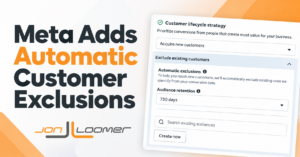
Meta’s recent introduction of automatic customer exclusions within their Customer Lifecycle Strategy marks a pivotal development. While seemingly a minor feature on the surface, its implications for how we manage campaigns, allocate budgets, and maintain a seamless customer journey are profound. This isn’t just about automating a checklist item; it’s about a fundamental shift in how ad platforms aim to help us optimize the customer funnel, demanding a more strategic, system-level approach to campaign operations.
The Operational Impact of Dynamic Exclusions
Historically, managing customer exclusions meant manually uploading lists, setting up complex custom audience rules, and consistently updating them – a process ripe for oversights. A customer who just converted might still see a prospecting ad, creating a jarring experience and inefficient ad spend. Meta’s automatic exclusions aim to mitigate this by dynamically preventing your ads from being shown to customers who have already completed a desired action, such as a purchase or signup, within a defined timeframe.
For ad ops teams, this automation theoretically translates to fewer manual tasks and a reduced risk of targeting errors. Media planners can now design lifecycle campaigns with greater confidence that their upper-funnel efforts won't bleed into lower-funnel conversions. The immediate benefit is clearer segmentation and potentially better ROI on prospecting campaigns, as budget is no longer diluted by targeting already-converted users. This frees up valuable time, shifting the focus from manual list management to higher-value strategic planning and performance analysis.
However, this newfound automation also introduces new operational considerations. How do you ensure your creative assets are still relevant and distinct for the remaining audience? If an audience segment is dynamically excluded from one campaign, how does that impact the reach and frequency of other campaigns targeting similar (but not identical) groups? Effective utilization requires a deep understanding of your overall customer journey and a meticulous approach to campaign structuring. Without robust campaign metadata management, it becomes challenging to track which creative variations are associated with which lifecycle stage, and how performance shifts as Meta's algorithms dynamically adjust your target audience.
Integrating Automation into a Holistic Strategy
While Meta handles the exclusion logic, the strategic oversight remains firmly in the hands of the marketing professional. This feature isn't a silver bullet that negates the need for careful planning; rather, it elevates the importance of a holistic campaign operations strategy. Your media planning software needs to be sophisticated enough to account for these dynamic shifts, allowing you to project and reallocate budgets based on real-time audience availability across various platforms.
Consider the ripple effect: if Meta automatically excludes recent purchasers from your prospecting campaigns, your retargeting or loyalty campaigns targeting those same customers become even more critical. You need to ensure a coherent creative narrative and budget allocation across all stages of the funnel. This demands a powerful campaign operations platform that can centralize your creative assets, unify your media plans, and provide a single source of truth for all campaign data.
Furthermore, the success of automatic exclusions hinges on the quality of the data feeding Meta’s algorithms. Ensuring accurate conversion tracking and robust CRM integration is paramount. This requires stringent campaign QA software to verify that exclusions are functioning as intended and that data discrepancies aren't silently eroding your campaign performance. Tools that enable precise naming convention software are also indispensable here, ensuring every campaign, ad set, and creative is tagged consistently for accurate reporting and lifecycle analysis, especially when audiences are dynamically shifting.
The Future of Precision Targeting
Meta's automatic customer exclusions represent another step towards more intelligent, automated ad platforms. For ad ops managers, media planners, and marketing technologists, this isn't just a technical update; it's an opportunity to re-evaluate and optimize your entire campaign lifecycle strategy. The time saved on manual exclusion lists can be reinvested into developing more sophisticated creative strategies, deeper performance analysis, and exploring new avenues for customer engagement.
Embrace this automation, but pair it with a robust ad operations platform that provides the overarching control and insights you need. Platforms like AdSoda allow you to manage your creative assets, execute complex media plans, and maintain rigorous QA across all your ad platforms – ensuring that while Meta handles the what, you retain full control over the how and why. The future of ad operations isn't just about more automation; it's about smarter, more integrated automation that empowers strategists to build truly seamless and impactful customer journeys. Your next step should be to audit your current lifecycle campaigns, understand where manual exclusions are a bottleneck, and strategically integrate this new Meta feature to optimize both spend and customer experience, all while ensuring your foundational campaign operations are robust enough to leverage its full potential.
You might also like

Beyond the Hype: Why Strategic AI Teams Are Reshaping Campaign Operations
Discover how leading marketers are strategically integrating AI into their operations, moving beyond hype to achieve tangible wins. Learn why a problem-centric approach, robust process design, and a strong foundational platform are essential for transforming ad ops and media planning, not just adopting new tech.
Read more →
Beyond the Buzzword: How Operationalizing 'Science-Backed Brand Building' Transforms Ad Ops
The marketing world demands both data-driven precision and cultural agility. For ad ops and media planning, this means operationalizing complex strategies. Discover how integrating your campaign operations platform can bridge the gap, from robust data management to agile creative workflows, ensuring your team isn't just executing, but strategically enabling brand growth.
Read more →
Beyond the Broken Campaign: Why Operational Resilience is Your New Brand Deal
Is your ad ops team constantly battling campaign breakdowns? This post reinterprets the 'broken suitcase' dilemma as a metaphor for common operational challenges in digital advertising. Discover how moving beyond reactive fixes to a proactive, resilient campaign operations platform like AdSoda can prevent errors, streamline workflows, and unlock true scalability for your campaigns. Learn the strategic importance of robust naming conventions, creative asset management, and integrated media planning in today's fast-paced advertising world.
Read more →Ready to streamline your campaign operations? Sign up for AdSoda and take control of your media planning and ad activation — free to get started.