Scaling Retail Media: How Google Merchant Center's 1,000 Account Limit Redefines Ad Ops
In the relentless pursuit of scale and efficiency, modern advertising operations teams often find themselves at a crossroads. On one side lies the immense…
In the relentless pursuit of scale and efficiency, modern advertising operations teams often find themselves at a crossroads. On one side lies the immense opportunity of retail media – a rapidly expanding landscape demanding agility and precision. On the other, the operational complexities of managing an ever-growing portfolio of client accounts, product feeds, and platform specificities. The struggle is real: how do you manage dozens, even hundreds, of Google Merchant Center (GMC) accounts without drowning in administrative overhead?
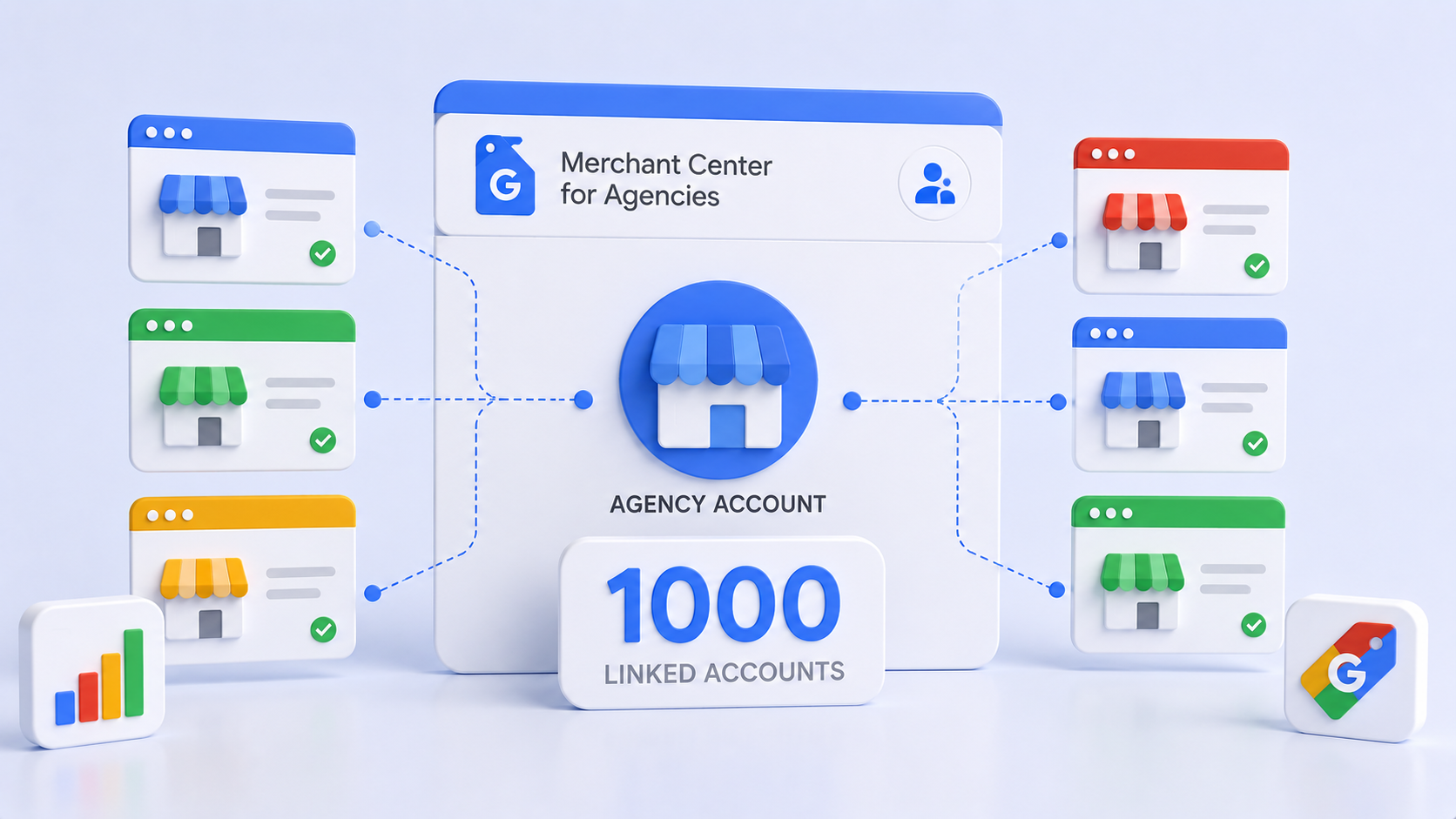
This tension has been a persistent headache for ad ops managers, media planners, and marketing technologists. The recent update from Google, allowing agencies to link up to 1,000 Merchant Center accounts to a single primary account, isn't just a numerical bump; it's a strategic pivot. It acknowledges the inherent demand for scaled retail operations and opens the door for a more centralized, streamlined approach to Google Shopping campaigns. But the real question for our audience isn't that it's possible, but how to truly capitalize on this newfound flexibility to drive efficiency and performance.
Beyond the Numbers: Unlocking Operational Agility
For agencies managing a diverse client roster, or large brands with multiple subsidiaries, regional storefronts, or distinct product lines requiring separate GMCs, this increased linking capacity is a game-changer. Previously, hitting the lower account limits meant creative workarounds, fragmented management, or even turning down business opportunities that simply weren't operationally viable. Now, the pathway to onboarding and managing a significantly larger volume of retail advertisers is clearer.
This shift primarily addresses the connection problem, not necessarily the management problem. While linking provides a centralized point of access, the core challenges of maintaining data quality, ensuring consistent naming conventions, executing strategic media planning, and performing robust campaign QA across hundreds of distinct GMC accounts persist. In fact, scaling the number of linked accounts without robust operational frameworks in place can quickly amplify existing inefficiencies into catastrophic bottlenecks.
Consider the implications for campaign metadata management. With potentially 1,000 product feeds and associated campaign structures, inconsistent data entry or a lack of standardized naming convention software can quickly lead to a black hole of unmanageable campaigns. Imagine trying to reconcile performance data or troubleshoot a product disapproval across hundreds of accounts where basic tagging or naming structures diverge. This is where the strategic implementation of a dedicated campaign operations platform becomes not just beneficial, but essential.
The Operational Layer: Bridging Connection and Control
Google's update removes a significant hurdle, but it places a greater emphasis on the tools and processes that sit above individual ad platforms. An advanced ad operations platform acts as this crucial operational layer, transforming the mere ability to link accounts into truly efficient management at scale.
Think about the typical lifecycle of a retail media campaign: from creative asset ingestion and approval to product feed optimization, campaign setup, activation, and ongoing QA. Each step, when multiplied by hundreds of accounts, demands automation and centralized control. For instance, ensuring all linked GMC accounts adhere to specific product data quality standards – preventing disapprovals or optimizing attributes for better visibility – requires more than manual spot-checks. This is where a system that offers sophisticated campaign QA software can automatically audit product feeds, flagging issues before they impact performance.
Furthermore, while GMC provides the product feed infrastructure, strategic media planning software is still needed to orchestrate budget allocation and audience targeting across these many accounts, especially when factoring in other paid channels. A unified dashboard that pulls data from linked GMCs (via Google Ads) and other platforms can provide the holistic view necessary for informed decision-making, allowing planners to optimize for overall portfolio performance rather than siloed account metrics. AdSoda.io, for example, is designed to provide this comprehensive oversight, enabling teams to manage creative assets, enforce naming conventions, and automate activation workflows across a vast network of campaigns and ad platforms, including those connected through Google Merchant Center.
What This Means for Your Day-to-Day Operations
The 1,000-account limit for Google Merchant Center isn't just an administrative convenience; it’s an invitation to fundamentally rethink your approach to retail media at scale. For ad ops managers, it’s an opportunity to consolidate client operations and streamline onboarding. For media planners, it's about achieving a broader, more integrated view of product advertising performance. For marketing technologists, it highlights the increasing importance of robust integrations and automation solutions.
Moving forward, your immediate priority should be to evaluate your existing operational framework. Can your current systems handle this potential influx of linked accounts? Do you have the campaign metadata management tools to maintain order? Is your naming convention software robust enough to prevent chaos at scale? The answer for many will highlight the critical need for a centralized campaign operations platform that can provide the necessary governance, automation, and visibility across your entire retail media ecosystem. Don't just link more accounts; manage them with a strategic operational backbone that turns scale into a competitive advantage.
You might also like

Beyond the $800M Win: The Unseen Operational Pillars of Global Campaign Management
The Uber-Omnicom $800M account win underscores a critical, often-underestimated challenge for ad ops professionals: the sheer operational complexity of executing global campaigns at scale. This post explores the invisible operational pillars required to deliver consistency, efficiency, and compliance across multi-market advertising efforts, from creative asset management to media planning and quality assurance. Discover how a robust campaign operations platform can transform this complexity into a competitive advantage.
Read more →
The Operational Imperative of Brand Clarity: Why Ad Ops Can't Afford Ambiguity
In an era where every brand feels compelled to be a tech, media, and entertainment company all at once, digital marketing and ad operations teams face immense complexity. How do you scale campaigns efficiently without fragmenting your brand’s core identity? Discover why brand clarity is no longer just a marketing concern but an operational imperative that directly impacts campaign performance and efficiency, and how a robust ad ops platform can embed this clarity into your workflows.
Read more →
Bridging the Divide: How a Unified Campaign Ops Platform Solves Retail Media's Internal Friction
Retail media's potential is huge, but internal silos between ad and merchant teams often sabotage success. Discover how a unified campaign operations platform can dismantle these walls, streamline workflows, and drive campaign performance through robust metadata management, standardized naming conventions, and integrated QA.
Read more →Ready to streamline your campaign operations? Sign up for AdSoda and take control of your media planning and ad activation — free to get started.