
The De-Emphasis of Lookalikes: What Meta's Audience Shift Means for Campaign Operations
As ad platforms like Meta increasingly automate audience targeting, traditional inputs like lookalike suggestions are fading. Discover how this shift impacts campaign operations and what modern ad teams can do to maintain control, transparency, and performance by leveraging robust internal processes and campaign operations platforms.
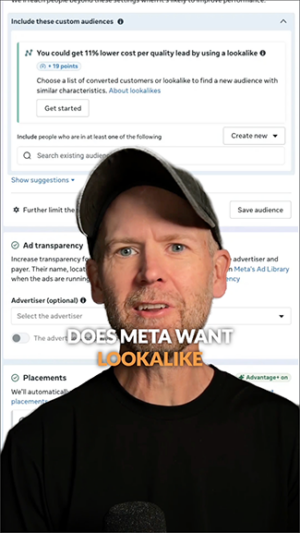
Digital advertising is in a constant state of flux, but few shifts are as significant as the growing “black box” nature of major ad platforms. For ad ops managers, media planners, and campaign managers, this often means less direct input and more reliance on algorithms. Take Meta, for example. We’ve observed a quiet but clear deprioritization of advertiser-provided lookalike audience suggestions – a fundamental change that demands a re-evaluation of how we approach audience strategy and campaign management.
Historically, defining granular lookalike audiences was a tactical superpower for many digital marketers. It allowed teams to leverage their valuable first-party data, scaling reach to users who mirrored their best customers. Meta, however, has steadily removed prominence from advertiser-submitted lookalike suggestions, pushing towards broader targeting, simplified input fields, and greater reliance on its own expansive data sets and machine learning capabilities. The explicit options to provide these suggestions have become less prominent, hinting at a strategic shift towards automated discovery rather than prescriptive input.
This isn't an isolated incident; it reflects an industry-wide push towards automation. Platforms aim to simplify campaign setup, reduce friction, and, arguably, leverage their proprietary data and AI more effectively. For high-volume, performance-driven teams, however, this simplification can feel like a loss of control. If the platform is making more of the ‘audience’ decisions, where does an ad ops manager or media planner exert influence?
The Shifting Sands of Audience Targeting
This trend underscores a critical point: if platforms are increasingly taking the reins on who to show ads to, then what you show them, and how you meticulously track and attribute it, becomes paramount. The emphasis shifts from painstakingly defining lookalikes to ensuring your creative speaks to a broad yet relevant audience, and that your first-party data – the foundation for any custom audience – is meticulously clean, robust, and privacy-compliant.
The implications for campaign operations are significant:
- Less Granular Control: Teams must adapt to broader audience definitions and trust the platform’s optimization algorithms more. This necessitates a shift in performance analysis, focusing on how well the platform learns and optimizes within those broader parameters.
- Elevated Importance of First-Party Data: Your direct customer data remains your most valuable asset. The cleaner and more comprehensive it is, the better the platform’s algorithms can work with it, even if you’re not explicitly telling it to create a ‘1% lookalike of purchasers.’
- Creative as the Ultimate Lever: If audience targeting becomes more automated, creative becomes the primary differentiator. Engaging, relevant, and diverse creative assets are essential to capture attention and convert within algorithmically determined audiences.
Beyond the Black Box: Where Campaign Operations Reclaims Control
In an environment where platform algorithms dictate more of the ‘how,’ the modern campaign operations team must double down on the ‘what’ and ‘why’ from an internal perspective. This isn't about fighting automation, but rather building an operational framework that thrives alongside it.
This means elevating your internal campaign metadata management. While Meta might simplify its inputs, your team needs granular data to understand performance. Are you accurately tagging campaigns, creatives, and audiences with consistent naming conventions that allow for meaningful analysis outside the platform's simplified reporting? This internal discipline is crucial for connecting platform performance to business objectives.
Effective media planning software becomes even more critical. Even if the lookalike suggestions are automated, the strategic allocation of budget across channels, the holistic view of customer journeys, and the overarching media strategy still fall squarely on the media planner's shoulders. Software that centralizes these plans and offers multi-channel visibility is indispensable.
With audience control diminishing, creative asset management emerges as a hero function. A robust system ensures that the right message reaches the right person, even if 'the right person' was algorithmically determined. This involves managing versions, approvals, performance data, and ensuring brand consistency.
Furthermore, robust campaign QA software is non-negotiable. If basic inputs are simplified, ensuring that the right simplified inputs are used, tracking is correctly implemented, and budget pacing is on track across myriad campaigns becomes even more vital to prevent costly errors. Automation reduces human input, but robust QA validates that the correct human inputs were provided before automation takes over.
Navigating the Automated Future
This is precisely where a dedicated campaign operations platform like AdSoda.io becomes indispensable. It bridges the gap between increasingly automated ad platforms and the stringent demands of internal operational excellence. By centralizing creative asset management, standardizing media planning processes, enforcing consistent naming conventions (our naming convention software capabilities), and providing robust QA workflows (our campaign QA software features), AdSoda empowers ad operations platform teams to maintain transparency and control where it matters most: within their own processes and data. This ensures your team can leverage the benefits of platform automation without sacrificing strategic oversight or data integrity.
The trend towards platform automation isn't going away. Instead of fighting it, ad ops and media planning professionals must adapt by shifting their focus from micro-managing platform inputs to optimizing the elements they can control: the quality of their first-party data, the effectiveness of their creative, and the rigor of their internal campaign operations. Embrace this evolution by investing in foundational internal processes and technology that provide clarity and control over your campaigns, regardless of how much platforms simplify their interfaces. This ensures you're not just executing campaigns, but strategically understanding and optimizing every dollar spent in an increasingly complex digital ecosystem.
Image description: A stylized illustration depicting a complex network of interconnected nodes, representing data flows and algorithmic processes within a digital advertising platform. A human hand, positioned slightly above the network, holds a magnifying glass, symbolizing the enduring need for human oversight, strategic input, and meticulous operational management amidst increasing automation. The background is a gradient of digital blues and purples, hinting at technology and data.
You might also like

The 'Google Zero' Shift: Reclaiming Audience Control in a New Era of Campaign Operations
The digital landscape is shifting, entering what some call the 'Google Zero' era. This means traditional organic reach is diminishing, forcing advertisers to rethink campaign operations and focus on owning audience relationships. Learn how specialization, data-driven insights, and robust platforms like AdSoda.io are essential for ad ops managers to thrive amidst these changes.
Read more →
Beyond the CMO: How C-Suite Influence is Reshaping Campaign Operations
The C-suite is increasingly dictating advertising strategy, moving beyond the traditional CMO brief. This shift demands unprecedented transparency, data integrity, and operational precision from ad ops teams. Discover how this new mandate reshapes campaign management, from metadata to QA, and why robust campaign operations platforms are essential to bridge the gap between boardroom vision and flawless execution.
Read more →
The Unbundling of the Web: What Publishers Opting Out of Google Search Means for Your Ad Ops Strategy
As publishers explore opting out of Google Search, the digital ad landscape faces a fundamental shift. Discover how this "unbundling" impacts media planning, creative asset management, and campaign operations, and what ad ops professionals need to do to maintain agility and performance with robust platforms.
Read more →Ready to streamline your campaign operations? Sign up for AdSoda and take control of your media planning and ad activation — free to get started.